Dr. Gymbro
←

#protein intake

4 articles
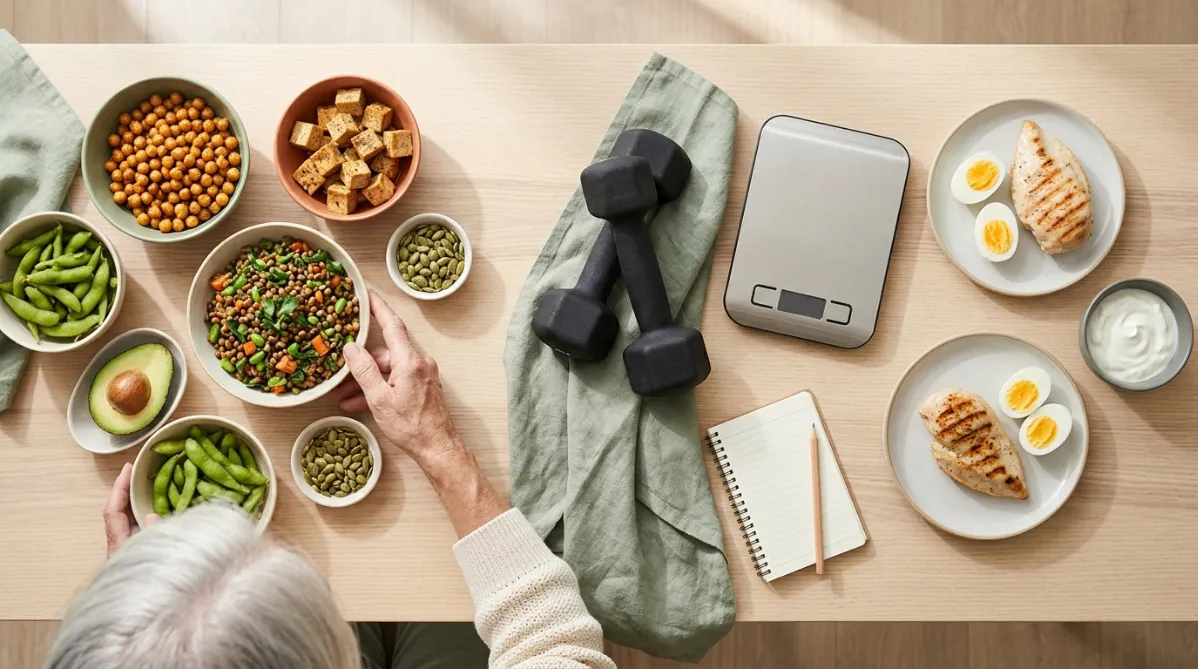
A bright, airy overhead flat-lay on a pale oak table in soft morning light. On the left, a vibrant plant-based protein spread in ceramic bowls: roasted chickpeas, marinated tofu cubes, lentil salad with herbs, edamame, sliced avocado, and a small dish of pumpkin seeds. On the right, a few contrasting items: a simple plate with grilled chicken breast, a hard-boiled egg halved, and a small bowl of Greek yogurt. Between the two sides, a pair of compact, matte-black hexagonal dumbbells rests on a folded sage-green linen towel, with a simple stainless-steel kitchen scale and a small open notebook with a pencil, suggesting tracking protein intake. A pair of weathered, elegant older hands, silver-haired and mid-60s, reaches in gently to pick up a bowl, with a casual cream knit sleeve visible. Natural window light casts soft diagonal shadows across the table. The palette is warm and muted: sage green, cream, terracotta, soft charcoal, with pops of fresh green and orange from the vegetables. Shallow depth of field, crisp focus on the food and dumbbells, gentle blur at the edges. The composition follows a clean editorial style with generous negative space at the top and right for headline text. The overall feel is modern wellness-magazine photography: calm, clean, and inviting, with tactile textures of linen, ceramic, wood, and fresh produce. Landscape 16:9 framing.
nutrition

Diventare vegetariani dopo i 55 anni? Cosa ha rivelato uno studio sul sollevamento con 108 partecipanti

BY DR. GYMBRO ·

Stai valutando di eliminare la carne mentre ti alleni nella tua tarda cinquantina, sessantina o oltre? Lo studio randomizzato IMPACT, condotto su 108 adulti più anziani, ha mostrato che sia i vegetariani sia gli onnivori hanno aumentato massa muscolare e forza in 12 settimane di allenamento di resistenza. Tuttavia, il gruppo vegetariano ha assunto meno proteine (1,24 vs 1,58 g/kg/giorno) e ha guadagnato meno muscolo appendicolare (+0,38 vs +0,66 kg). I ricercatori non sono riusciti a dimostrare la non‑inferiorità della dieta vegetariana, rendendo il risultato sul muscolo statisticamente inconcludente. Scopri cosa dimostra davvero lo studio, dove mancano i dati e come impostare gli obiettivi proteici se ti alleni con una dieta prevalentemente vegetale.
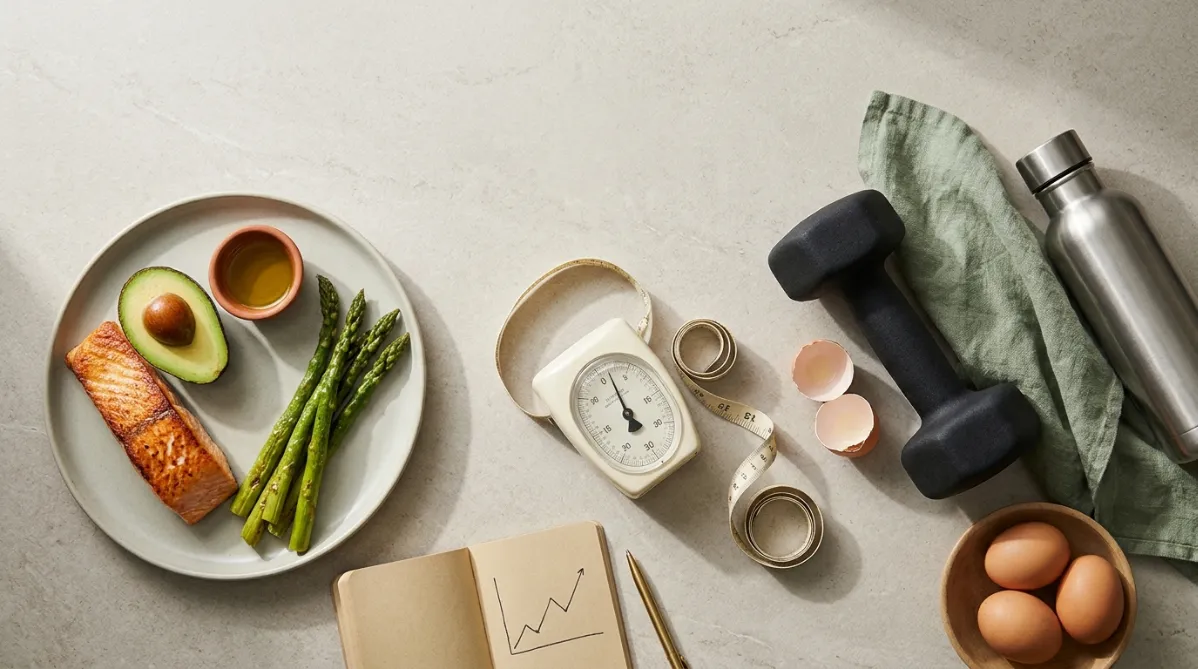
A bright, minimalist editorial flat-lay photographed from above on a pale warm-gray stone countertop in soft natural window light. On the left, a ceramic plate holds a keto-style meal: a seared salmon fillet with crisp skin, half an avocado with a glossy pit, a scattering of bright green asparagus spears, and a small dish of golden olive oil. On the right, a matte black dumbbell rests beside a folded sage-green linen towel and a slim stainless steel water bottle. A raw egg and a few whole eggs in a shallow wooden bowl add a protein cue. In the center, a clean analog kitchen scale and a flexible cream-colored measuring tape curl gracefully in a loose spiral, hinting at body composition tracking. A small open notebook with a minimal hand-drawn line graph, with no legible text, sits at the lower edge with a thin brass pen.

The palette is calm and modern: muted sage green, creamy ivory, warm terracotta accents from a small clay ramekin, and deep charcoal from the dumbbell. Shadows are soft and long, falling diagonally, giving gentle depth. The composition leaves generous negative space at the top and right for title placement. Shallow depth of field, crisp focus on the salmon and dumbbell, subtle film-like grain, and a refined, trendy health-journal look reminiscent of contemporary wellness magazines. Natural, airy, balanced, and slightly editorial, with no people, no text, and no futuristic elements.
nutrition

Il keto preserva il muscolo durante un taglio? I dati sulla massa magra sorprendono

BY DR. GYMBRO ·

Il keto è spesso pubblicizzato come un modo per salvare il muscolo durante un taglio, grazie ai presunti effetti anti‑catabolici dei chetoni. Una nuova review narrativa su *Nutrients* mette alla prova questa idea con i dati clinici e la ritrova carente. Le diete chetogeniche riducono soprattutto il grasso, ma le meta‑analisi mostrano una perdita di massa magra leggermente più marcata rispetto a diete non chetogeniche. Poiché DXA e BIA non distinguono muscolo da acqua e glicogeno, l’effetto reale sul tessuto muscolare resta incerto. Ciò che davvero protegge il muscolo è il classico trio: proteine adeguate, allenamento di resistenza e un deficit moderato.

A landscape editorial photograph of a sunlit kitchen table, shot from a slightly elevated three-quarter angle. On the left, a rustic ceramic bowl holds a warm plant-based protein meal: roasted chickpeas, marinated tofu cubes, edamame, quinoa, and wilted greens, topped with toasted sesame seeds. Around it are small dishes of lentils, walnuts, pumpkin seeds, and a block of tempeh on a wooden board. On the right, a pair of weathered hands belonging to an older adult with silver hair, partially visible and softly out of focus, rests beside a pair of light dumbbells and a rolled sage-green yoga mat leaning against a chair. A linen napkin, a glass of water with a lemon slice, and a small handwritten notebook with a pen suggest careful planning. Soft morning light streams through a large window on the left and casts gentle long shadows across the pale oak tabletop. The color palette is muted and earthy: warm cream, sage green, terracotta, soft mustard, and natural wood tones. The background has shallow depth of field, with blurred shelves of herbs in pots and a few hanging plants. The mood is calm, hopeful, and health-focused, in the style of a modern lifestyle magazine or science journal feature, with clean composition, generous negative space in the upper right for headline text, and a subtle film-like grain. No text, no logos, no futuristic elements.
nutrition

Diventare vegano dopo i 65 anni? La massa magra è diminuita di 1,15 kg in 12 settimane

BY DR. GYMBRO ·

Una sperimentazione randomizzata di 12 settimane su 72 adulti di 65 anni o più ha mostrato che, passando a una dieta vegana senza pianificare l’apporto proteico, si è registrata una perdita di 1,15 kg di massa magra. Il gruppo onnivoro è rimasto stabile, mentre l’allenamento di resistenza ha limitato la perdita a 0,62 kg. Il vero responsabile è stato il calo di proteine, di circa 20‑28 g al giorno, non le piante in sé. Ecco i dati e i consigli per preservare i muscoli con una dieta vegetale.
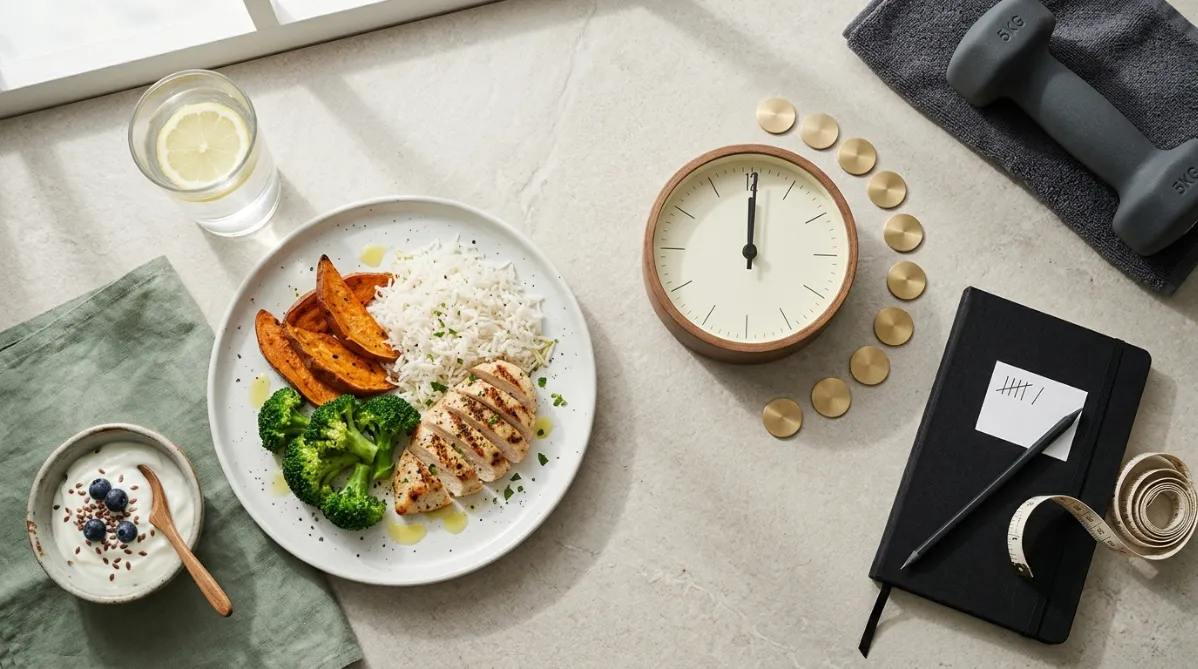
A wide, editorial-style flat lay photographed from above on a pale warm-gray stone surface, bathed in soft natural window light with gentle diagonal shadows. On the left side, a minimalist matte white ceramic plate holds a balanced bulking meal: sliced grilled chicken breast, a mound of fluffy basmati rice, roasted sweet potato wedges, and bright green broccoli, with a drizzle of olive oil glistening. Beside it sits a tall glass of water with a lemon slice and a small bowl of Greek yogurt topped with blueberries. On the right side, a round analog clock face is subtly placed, or a simple wooden clock with a minimalist design, its hands marking noon, with a soft arc of eight small brushed-brass discs arranged in a curved line beside it, suggesting an eight-hour eating window. A sleek black notebook with a pencil rests nearby, with a few hand-drawn tally marks and a tape measure loosely coiled next to it. A single dumbbell with a matte charcoal finish sits at the top right edge, partially cropped, hinting at strength training. The color palette is muted and sophisticated: sage green, warm cream, terracotta, soft charcoal, and touches of brass. Generous negative space on the right third for title text overlay. Shallow depth of field with crisp focus on the plate, subtle film grain, and a calm, modern wellness-magazine aesthetic reminiscent of contemporary health and fitness journals. Clean composition, natural textures like linen napkin and speckled ceramic, and no people or text visible.
nutrition

Digiuno 16:8 durante il bulk: stessa massa muscolare, meno della metà del grasso accumulato

BY DR. GYMBRO ·

I sollevatori che hanno concentrato il loro bulk in una finestra di 8 ore hanno guadagnato la stessa quantità di muscolo e forza dei soggetti che hanno mangiato normalmente, ma con meno della metà del grasso in più. La sorpresa è che il digiuno non è stato la magia: il gruppo 16:8 ha semplicemente ingerito meno calorie rispetto al surplus previsto, con conseguente riduzione di proteine e carboidrati. Questo studio randomizzato di 12 settimane suggerisce che il mangiare a tempo limitato sia uno strumento di aderenza per un bulk più magro, non un trucco metabolico. Di seguito i dati, il target proteico raggiunto e a chi può interessare.

This page is available in